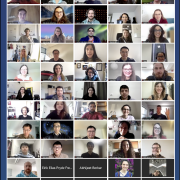
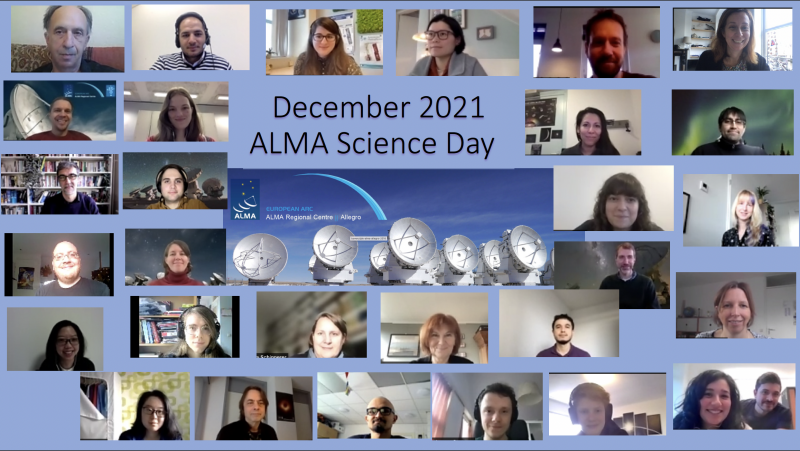
MAYA2022 Group Photo

MAYA – Meeting of ALMA Young Astronomers – First Edition

From March 2 to 4, 2022, the first Meeting of ALMA Young Astronomers (MAYA) took place fully online. The conference was dedicated to undergraduate and PhD students as well as postdocs. The goal of the meeting was to allow participants to share their ALMA projects in an open and friendly atmosphere, interact with other participants and staff from the ARC nodes, and potentially trigger new collaborations and projects.

The organising committee received more than 150 registrations and more than 90 submitted abstracts for the program. In the end, the program covered all types of astronomical subjects from solar observations to distant galaxies as well as two invited talks about the history of ALMA and the European ARC network. The presentations were recorded and are available in the MAYA playlist on the European ALMA Regional Centre Network YouTube channel. Participants who were not awarded presentation time during the conference were given the opportunity to pre-record their talks and upload them to the same playlist.

The high quality of the presentations and the friendly interaction in the Q&A time after each talk as well as on Slack was impressive. Besides the presentations, the meeting offered ample time for the participants to get to know each other in Zoom breakout rooms and during the social evenings. A quiz with ALMA trivia questions added a playful tone to some of the breaks.

An overwhelming 93% of participants who filled the feedback survey were overall satisfied with the meeting, making this first MAYA conference a great success! The survey participants stated that they most enjoyed the variety of the program and the early career attendees. More than 90% of the survey participants are interested in participating in the next MAYA event in 2023!

ALminer: ALMA archive mining and visualization toolkit

Allegro has developed a tool to ease the scientific exploration of the rich ALMA Science Archive (ASA). ALminer is a novel Python-based code that enables users to efficiently query, analyse, and visualise the contents of the ASA. Users can programmatically query the archive for positions, target names, or any other keywords in the archive metadata (e.g. proposal title, abstract, scientific category) in a simple way. ALminer’s plotting routines allow the query results to be visualised, and its analysis functions allow users to filter the results and check whether certain frequencies of interest are covered in the queried observations. The code also allows users to directly download ALMA data products in FITS format and/or the raw data that can be used for manual image processing. ALminer has been designed to make mining the ALMA archive as simple as possible, while being flexible to be customised according to the user’s scientific interests. The code is released with a detailed tutorial Jupyter notebook, introducing ALminer’s common functions as well as some of its more advanced options.

Users are strongly encouraged to use ALminer in the lead-up to the ALMA Cycle 9 Call for Proposals to design their projects. ALminer can also aid users in ensuring their proposed observations do not duplicate observations of the same location on the sky with similar observing parameters (frequency, angular resolution, coverage, and sensitivity). Feel free to contact us if you need support in using ALminer.

ALMAxLeiden - Lettering

ALMAxLeiden – Astronomy-inspired, self-guided city walking tours through Leiden

As part of the European City of Science Leiden 2022 project, Allegro is developing the ALMAxLeiden project: a series of self-guided walking tours in Leiden. The aim of ALMAxLeiden is to introduce the public to the concept of interferometry and specifically to ALMA in a fun and creative way. The ALMA observatory spans roughly the same size as the city of Leiden. By virtually stationing each of the 66 ALMA antennas at public locations in Leiden, we have turned Leiden into an ALMA observatory. Through self-guided walking tours, participants embark on journeys to ‘observe’ an astronomical object by visiting a subset of these virtual antennas. At each location a new part of the story gets revealed, and participants get to answer trivia questions about ALMA or solve astronomy puzzles. Visiting each location means observations from that antenna have been obtained, hence the astronomical object being ‘observed’ becomes clearer. By the end of the walking tour, the participants will have learned about ALMA and gained a better understanding of radio astronomy and the interferometric technique. The first ALMAxLeiden walking tour is ready to be launched on March 30th, and we are currently in the process of developing a walking tour intended for young kids. Stay tuned for more information!

ALMA at the European Astronomical Society meeting

The next meeting of the European Astronomical Society will take place in Valencia (Spain) from 27 June to 1 July 2022. This conference will be in-person. The abstract submission deadline has already passed but registration is open until the start of the conference.

Building bridges: The lifecycle of dust and gas in the Milky Way with ALMA and SKA – EAS S7 symposium

Our Galaxy and its immediate neighbourhood are the only regions where we can undertake detailed studies of the physics driving the formation and evolution of astrophysical objects throughout the entire life cycle of the interstellar medium. ALMA is playing a groundbreaking and fundamental role in the study of a broad range of environments and phenomena due to its unprecedented spatial resolution and sensitivity. At the same time, the Square Kilometre Array (SKA) is now under construction, and it will provide a unique perspective on our Galaxy, complementary to that of ALMA.

Within the life cycle of dust and gas, accretion, fragmentation, feedback, astrochemistry, and temporal changes are common to many astrophysical objects. The respective communities investigating these objects often do not interact – even though they are using many of the same techniques. Symposium 7 is dedicated to building bridges between communities studying events of similar nature in the life cycle of gas and dust but at different astronomical scales and in different environments. The program of the symposium contains five invited talks focusing on accretion and fragmentation on large and small spatial scales, feedback in star-forming regions and evolved stars as well as synergies between ALMA/SKA and other observing facilities.

This style of event- instead of object-focused symposium will hopefully attract many contributors from different fields and communities, lead to interesting discussions and foster new collaborations.

More information about the topics and programme of the symposium can be found here:

ALMA in Europe: support by the European ALMA Regional Centre Network and new ways of interacting with data through the ALMA Science Archive

In this lunch session we aim to present to the European astronomical community how ALMA user support in Europe has evolved over the last years, the various types of support it offers, and the ways the European astronomical community can make use of this support. We will provide an update on the ALMA Science Archive and the tools that were developed to maximise its science output. We will furthermore discuss the outcomes of the ALMA Redesign the User eXperience (RedUX) project and show some of the actions that have been taken regarding user support and archive development. We will finish by taking time to discuss recent relevant changes within ALMA that are of direct interest to the astronomical community, including for example the distributed peer review system of proposals and how the connection between the astronomical community and the European ARC network can be further improved. More information can be found here.

During the conference, ALMA will have a booth in the exhibition space where interested conference participants can visit to ask questions about ALMA and the ARC network and take home merchandise.

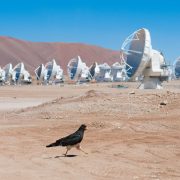
ALMA antennas

ALMA Cycle 9 Proposal Preparation Workshop

The Allegro team will host the ALMA Cycle 9 Proposal Preparation Workshop on March 28th, 2022. You should not miss this workshop if you are planning to write an observing proposal for the coming cycles of the ALMA telescope! The registration deadline is Monday, March 21st 2022.

We plan to have presentations/talks to explain the brand new capabilities offered for the new ALMA cycle, the Observing Tool, and how to make simulation of ALMA observations which could make your science case stronger. For newcomers, we will also have a presentation about ALMA use cases to inspire proposal ideas. In addition, we will present overviews about the Dual Anonymous procedure and the Distributed Peer Review process.

In fact, all proposals will be reviewed using the dual anonymous procedure, and for this new call, proposals requesting less than 50 hours on the 12-m Array, and less than 150 hours with the 7-m antennas, will be reviewed through the distributed peer review system.

The long baselines configurations are back in the list of array configurations for Cycle 9. With that, minimum and maximum baselines offered are 0.16 and 16.2 km, respectively. In addition, high frequency observations with long baselines can now be requested.

Moreover, new for this new cycle is the possibility to request VLBI observations of Continuum in Band 7, and VLBI Spectral Line observations in Band 3, as well as localised Solar mapping scans in bands 3, 5, 6 and 7 with Total Power antennas.
For more details, check the Cycle 9 pre-announcement!

Allegro logo

Allegro: 2021 look-back and upcoming year

As the pandemic continued throughout 2021, the Allegro staff also continued working from home for most of the year. However, despite of this, the group remained operational with activities divided into three main categories:

  • user support (e.g., contact scientist activities, face-to-face requests and training events)
  • development of expertise areas
  • carrying out independent scientific research.

It is particularly worth noting that Allegro had a full staff turnover in the past two years! With the exception of Michiel Hogerheijde (the Program Director) a whole new team was formed between 2020 and 2021, with the last three group members joining just over one year ago. This means that a good part of this year was dedicated to defining our internal workflows, updating our documentation and why not, getting to know each other (over Zoom!).

We would like to highlight here some of the most outstanding activities of Allegro from 2021, starting with our community events: we carried out a proposal preparation day in March and two Science Days and CASA training days in January and November. We featured presentations from the broad ALMA science community in the Netherlands, and also carried out dedicated trainings with hands-on components (for the most recent one, please read more here). Note that you can find recording of all these events on our Allegro YouTube channel and please remember to subscribe!

As mentioned previously, our Allegro postdocs also spend a significant fraction of their time on expertise areas. For 2021, most notably, we would like to mention two of those projects which were finalized this year: an easy-to-use and flexible-to-be-customized ALMA archival search tool, called ALminer¹ and a new ALMA tracker² (aka, the Dashboard) which is already being used by most of the EU ARC nodes to keep a regular overview of ALMA projects in the current queue, with data directly imported from the telescope.

As a look forward in 2022, we would like to advertise two very exciting new activities led by Allegro. The first is an outreach program in collaboration with the Leiden City of Science program and the Old Observatory: we will create a virtual ALMA telescope within the city of Leiden and demonstrate how large ALMA really is but also how interferometry works. Our program will also feature special Leiden walks, and games!

The second new activity will involve students at other Universities, who will be our new emissaries and will be kept “in the know” about ALMA-related activities throughout the year. More information will be distributed in the next newsletter, so please stay tuned to find out more!

We also continued to help our users with their approved projects and with their ALMA data as needed. You can contact us at any time at alma@strw.leidenuniv.nl.


¹ALminer was developed by Aida Ahmadi in collaboration with Alvaro Hacar.

²The ALMA tracker was developed by Andres Pérez Sánchez in collaboration with Carmen Toribio Perez.

Night picture of the ALMA array

The end of ALMA Cycle 7 and start of Cycle 8 2021 science observations

After a one-year break due to the Covid-19 pandemic, ALMA Cycle 7 science observations resumed on March 17, 2021, on a best-effort basis using 30-some antennas on the 12-m Array while the Array recovery was ongoing. Science observations with the Morita Array (ACA) restarted on May 18, 2021, using eight antennas. While some delays were encountered in the antenna configuration schedule due to bad weather and the pandemic affecting the maximum staffing levels at the site, the 12-m Array was successfully relocated to a hybrid configuration 9/10 by September, enabling the highest angular resolution observations in Cycle 7. The Array then moved back to configuration 8 by the start of Cycle 8 2021, facilitating a smooth transition to the start of the new cycle on October 1st.

With the start of Cycle 8 2021, 253 high-priority programs (Grades A & B) were added to the queue. The Cycle 8 call for proposals saw a total of 1735 proposals submitted requesting over 26,000 hours on the 12-m Array, exceeding the time requested in Cycle 7 by an extraordinary 37% and making this cycle the most competitive one to date. With the observatory encouraging larger, more ambitious programs, the number of proposals that requested between 25 and 50 hours roughly doubled and the number of Large Programs submitted increased to 40 in Cycle 8 from 14 in Cycle 7. Six Large Programs were selected to be carried out in Cycle 8, ranging in topics from exoplanets and the evolution of protoplanetary disks, the dynamics of the southern Bulge and central molecular zone of our galaxy, to nearby Jellyfish and ram pressure stripped galaxies and star-forming galaxies at z~4-5.

The ALMA Cycle 8 proposal call and review process was unique in many aspects. For the first time, proposals had to be written in a dual-anonymous fashion, hiding the identity of the proposal team from the reviewers, to reduce biases and make the review process as fair as possible. Of the 1735 proposals that were submitted, only nine had to be rejected because of not adhering to the guidelines. Furthermore, proposals requesting less than 25 hours on the 12-m Array or less than 150 hours on the Morita Array (ACA) were reviewed using a distributed peer review process. This meant the PIs were asked to review 10 proposals for every proposal submitted, with the option to delegate the review to a co-I. With this new system, more than one thousand astronomers reviewed a total of 1497 proposals. Moreover, dedicated review panels met virtually in the summer to discuss the proposals requesting between 25 and 50 hours on the 12-m Array and the Large Programs. Overall, the feedback on the newly-introduced dual-anonymous proposal review and distributed peer review have been overwhelmingly positive.

For a more detailed report on the outcome of the ALMA Cycle 8 2021 proposal review, see https://almascience.eso.org/news/documents-and-tools/cycle8/cycle8-2021-proposal-process

Group photo - 5th Netherlands ALMA Science day

5th Netherlands ALMA Science day recap

The 5th Netherlands ALMA Science day was hosted by the Allegro team on the 29th November, 2021. For the second time in a row this was a fully on-line version.

The scientific program included invited and contributed talks highlighting results of projects with all or part of the data taken by the ALMA telescope. The invited speakers for this special day were Dr. Alice Booth (Leiden Observatory – The Netherlands), Dr. Eva Schinnerer (MPIA – Germany), and Dr. Gergö Popping (ESO – Germany).

They presented results from ALMA observations of molecular gas: Dr. Booth presented results from deep observations of molecular gas at planet-forming scales taken with ALMA, showing both spatial distribution and the kinematics of the molecular gas detected. Later on, Dr. Schinnerer presented results from high resolution observations of nearby massive star-forming galaxies, and the analysis of a multi-wavelength data set including ALMA observations.

Then, Dr. Popping presented the current status of the ALMA telescope, including a summary of the return-to-science-operation-process, the end of Cycle 7 and the beginning of Cycle 8, as well as results of the analysis from the Proposal handling team of the proposal review process for ALMA observing Cycle 8.

Moreover, the program included 10 contributed talks by researchers from MPIfR, Leiden Observatory, ASTRON & Kapteyn Astronomical Institute. The contributed talks spanned over topics, frequencies (wavelengths), and spatial scales: Results from measurements towards the gaps of planet-forming disks to observations of molecular gas interacting in the circumnuclear disk of Active Galactic Nuclei using ALMA and also MATISSE were presented. The program also had contributed talks showing results of observations of high-z, massive, and active ultra luminous infrared galaxies or zooming in on the environment around the most famous black hole thanks to the Event Horizon Telescope project.

In total, approximately 35 participants (researchers and graduate students) from different institutions, including University of Groningen, KU Leuven, Nicolas Copernicus University, University of Amsterdam, SRON, ASTRON, Kapteyn Astronomical Institute, Leiden Observatory, and the Max Plank Institute for Astronomy (MPIA), and National Institute of Science Education and Research (India), attended the science talks, discussion and virtual social program organized by the Allegro Team.

P.d. The records of the Science day will be edited and made available for public access on the Allegro social media channels.

CASA logo

ALMA data reduction training day November 2021 recap

Allegro hosted an online data reduction training day on November 30th 2021 for 27 registered participants from the Netherlands and, thanks to the virtual format, further afield. On the day, Allegro fellows gave talks on accessing data from the ALMA archive and how to calibrate, image, self-calibrate and analyse that data as well as how to simulate ALMA observations. Following these talks, participants were coached to work with an ALMA test dataset in a hands-on session. After being shown the basics of CASA, participants were guided through inspecting, imaging and self-calibrating the test dataset and subsequently analysing it with CASA. The full programme is available at https://www.alma-allegro.nl/alma-data-reduction-training-day-nov-2021/. Slides and recordings of the talks will also be posted to this website in the new year.

12CO gas surround the AGN jet

Science Highlight: An AGN jet pushing around interstellar gas

Using Cycle 6 ALMA observations of the far-infrared bright radio galaxy PKS0023-26, Morganti et al. study the impact of the jet that is driven by the black hole powering the Active Galactic Nucleus on the interstellar gas. The 0.13-0.4” resolution images of 1.7 mm continuum and 12CO(2-1) emission reveal that the jet only strongly perturbs the inner sub-kpc regions. On scales of a few kpc, the action is limited to a more gentle “pushing aside” of the gas. Currently, this galaxy is forming stars at a clip pace of 25 Msun/year; in another few x 107 year, this rate may drop as the jet and lobes have expanded across the galaxy. This works shows that the feedback of the AGN on galaxy ISM and star formation acts on long time scales. The results will be published in Astronomy & Astrophysics and are already available on arXiv.